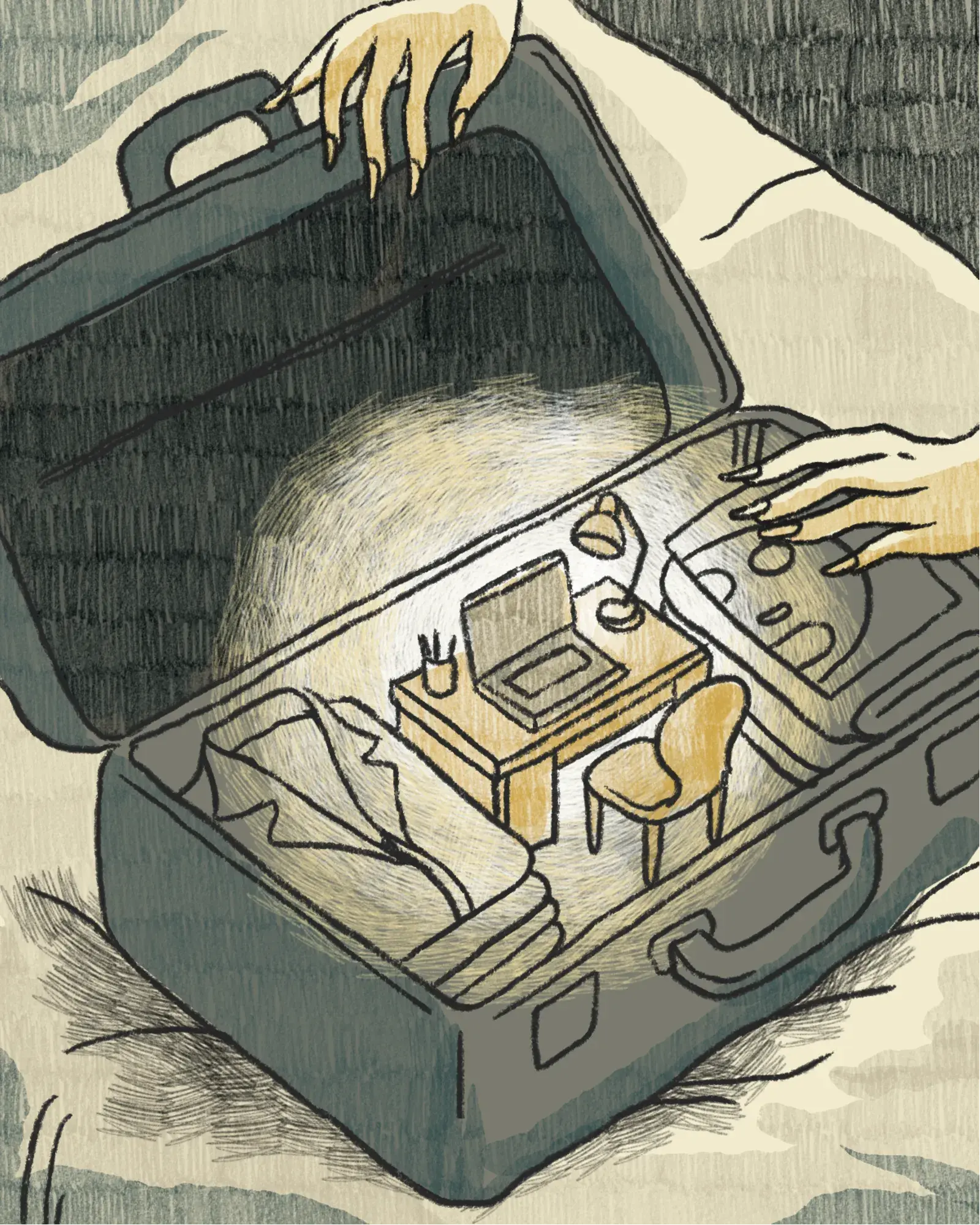
My life was founded on a certain amount of wanderlust. I’m an Air Force kid and I changed schools every year until 10th grade. New houses, new routines, new versions of myself, over and over again.
As a result, I’ve intentionally built a decidedly un-nomadic life. I settled in my college town of Fort Collins, Colorado, and haven’t moved more than a mile since my dorm room in 1999. I like knowing my barista, my Whole Foods cashier, the exact neighbors I’ll meet on my morning walk. I built a life designed to stay put.
But once I became an empty nester, I found myself wanting movement again, this time on my own terms. I started trading my national parks roadtrips for business travel whenever possible, seeking roles that took me away from home and into new places and experiences. With that, I learned new ways of working.
Over the last seven years, I’ve traveled a lot for work. It can be hard, but strangely, it’s also pretty simple. The friction points are real: early mornings, long days, disrupted routines.
But somewhere along the way, I realized that it wasn’t just a perk or a tradeoff. Travel is part of how I do my best work.
Because strategy, at its core, isn’t built in a vacuum. It requires divergent thinking and proximity to real people. It requires seeing how life is actually lived and not just how it’s reported in a deck.
Travel can do that, if you keep yourself open to it.
Here are a few things I’ve learned along the way:
Build friction out of the logistics, so you can stay open to everything else. Learn your home airport like it’s your job. Know where to park, which door to enter, and the fastest path to your gate. Aim to walk onto the plane, not sit at it.
It sounds tactical, but it’s actually strategic. The less energy you spend on logistics, the more you have for observation, noticing how people move through a space, what they carry, what they eat, and how they spend their time. When you’re not stressed, you start to see it.
Go to where your clients actually are. There’s no substitute for being in someone else’s environment. Seeing the office, the breakroom, and how people talk when they’re not presenting lets you pick up on things that never make it to the strategic brief. You walk away with a clearer understanding of your partners’ pace, tone, constraints, and pride points.
This observation helps close the distance between the strategy we’ll build and the actual humans and organizations that will make it real. It’s the distance between good strategy and bad.
Choose spaces that create real connection. If you can, skip the hotel and share a house with your coworkers when traveling. This won’t always fly with corporate policy, but when it does, it’s worth it. Some of my favorite Moxie trips have centered around rented houses instead of hotel rooms. You grocery shop, cook, and eat together. You will even see each other in the morning before the day starts and at night when everyone’s a little tired—and more themselves.
It accelerates trust. And better strategies almost always come from teams that trust each other enough to think differently, challenge ideas, and say the thing they’re not quite sure about yet.
Let disruption do its job. One of the most valuable parts of travel is that it breaks your routine. You’re not at your desk, sitting through the usual loop of meetings. You’re in a new grocery store at 6 p.m. watching what people actually buy for dinner. You’re in a coffee shop mid-day seeing who’s there and why. These small moments add up. They pull you out of pattern recognition and optimization and into actual observation, where new ideas come from.
Don’t just go. Arrive. It’s easy to move through work travel without ever really being anywhere. Airport, car, meeting, dinner, repeat. I try to interrupt that rhythm by choosing one place that feels essential to where I’m visiting—a landmark, a neighborhood walk, a corner bar, or a farmers market. I’ve seen dairy farms in Maine, bingo halls in Wisconsin, salumerie in Rome, and East High School in Salt Lake City (if you know, you know). My understanding of place and context are richer because of it. Each experience was grounding, reminding me that the people I aim to reach aren’t just personas or segments. They’re much richer and more interesting, and they live in the real world.
Keep it human. Bring sheet masks. Make the slightly (or entirely) ridiculous suggestion. Sit next to someone new at dinner. Work travel can easily become all performance with everyone “on” all the time. But our best work rarely comes from that version of ourselves. It comes when people relax just enough to be honest, curious, and a little bit unguarded.
I’ve come to think of work travel less as a disruption and more as a tool. It’s a way to get closer to clients, to coworkers, to the world people are actually living in. A way to step out of the patterns that make thinking efficient, but not always effective. And for someone who built a life rooted in one place, it turns out that leaving it (at least occasionally) is part of how I do my best work.
%20(2).png)