%20(2).png)
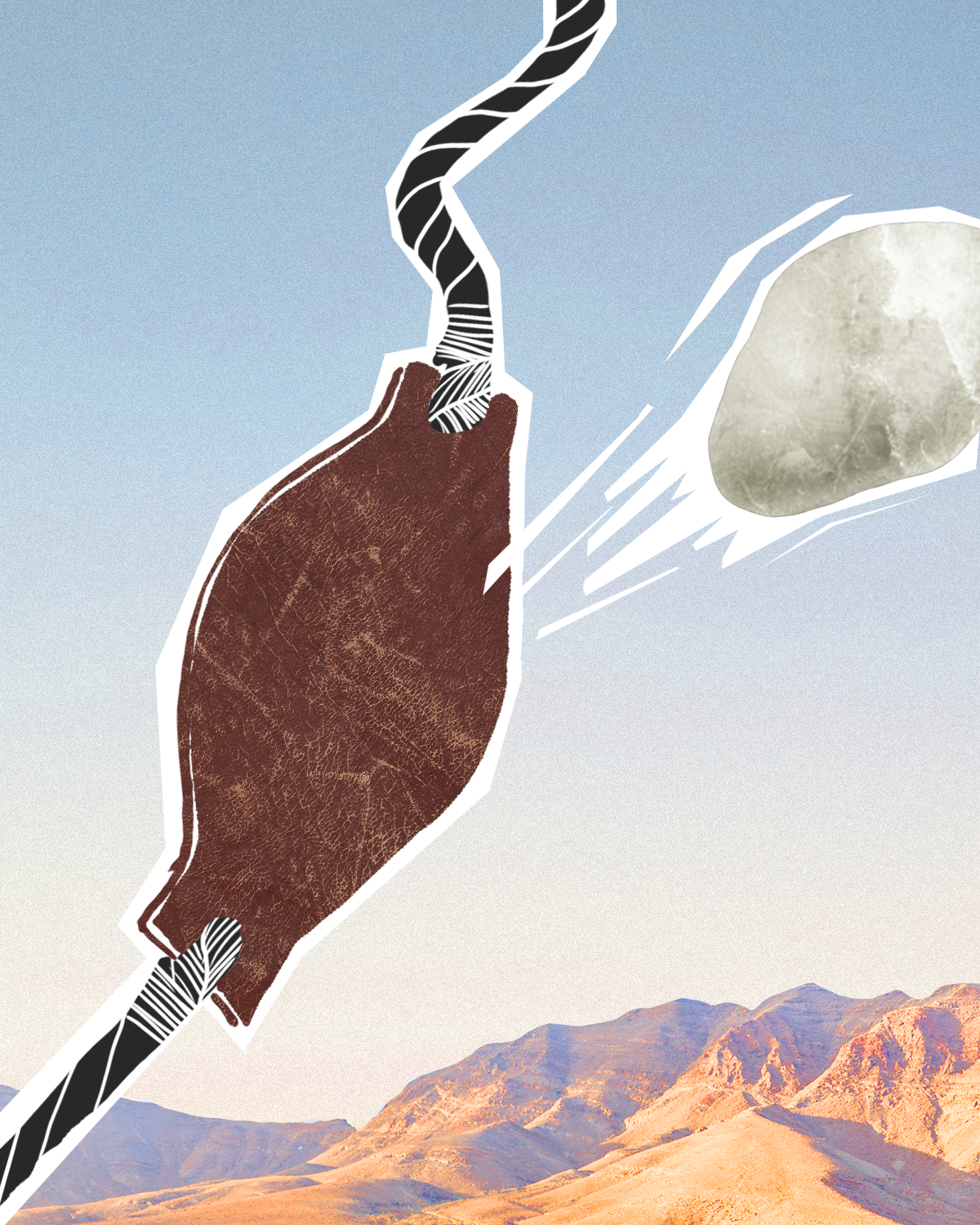
What if David had been a giant too? Setting aside the theological and cultural implications of this thought experiment, I can tell you one thing: it wouldn’t be a very interesting narrative. Instead, the story of David’s belief has endured for centuries, allowing us to see ourselves as potential victors in the face of insurmountable odds.
Strategy was not David’s plan. It was not his slingshot or even his single smooth stone. Strategy was his conviction to act. To guide that stone into Goliath’s forehead. To win a seemingly improbable victory.
The funny thing about strategy is that it’s most critical when resources are constrained. When you’re the biggest competitor and resources are redundant, it’s easy to flood the landscape, whether that’s a battlefield or a market. Strategy becomes performance, a mess of spreadsheets and decks that ultimately lead to the opposite of novel action. While this approach to strategy has become a business convention, it only benefits the giants. If you’re an actual David, victory happens when you break free of performative strategy and move into action.
A few principles that guide us at Moxie Sozo as we transform strategy into action:
Strategy was not David’s plan. It was not his slingshot or even his single smooth stone. Strategy was his conviction to act. To guide that stone into Goliath’s forehead. To win a seemingly improbable victory.
The funny thing about strategy is that it’s most critical when resources are constrained. When you’re the biggest competitor and resources are redundant, it’s easy to flood the landscape, whether that’s a battlefield or a market. Strategy becomes performance, a mess of spreadsheets and decks that ultimately lead to the opposite of novel action. While this approach to strategy has become a business convention, it only benefits the giants. If you’re an actual David, victory happens when you break free of performative strategy and move into action.
A few principles that guide us at Moxie Sozo as we transform strategy into action:
Know the terrain.
This is where research comes in. For all my talk about courage and action, knowing the landscape is critical to victory. When we work with clients to truly see the competitive category for what it is, unmet needs become clear, and the whitespace reveals itself. The competitor doesn’t seem so infallible anymore–the weak points are often obvious. More than a deck or a datatable, research becomes the source of knowledge for victory.
Fight an unfair fight.
Strategy sees beyond the current terms of competition. It asks, “What’s the advantage that changes the terms of competition?” When you arrive at the right answer, flexibility and nimbleness win the day, not size. Suddenly, the competitor’s complexity is a disadvantage.
Strategy doesn’t try to beat the giant at the giant’s game; it changes the game.
Choose before you are certain
If you wait for 100% certainty, you will be too late. By then, everyone else sees the opportunity, and your insight is now table stakes. When we workshop ideas, we aim for 70% certainty. It’s the (admittedly, unscientific) moment when we are informed enough to have conviction, but early enough to take advantage of the insight.
Give something up.
Strategy that doesn’t require you to give anything up isn’t strategy. Owning one idea means discarding five others. Putting resources here means not putting them somewhere else. Strategy rewards constraint as much as it is activated by it.
Put conviction into action.
Saying it loud so everyone can hear it: The workshop isn’t strategy. The positioning isn’t strategy. The brief isn’t strategy. They’re the necessary tools for creating it, but strategy becomes a verb when priorities shift. People in your organization act differently because of it. A product is killed, a market is entered, the creative changes. Someone might even say no. The best brands know that conviction requires courage to act on it.The next time you’re perfecting the strategy, please remember: The stone only mattered because David threw it.