A few years back, I gave a talk to our creative team about seeking inspiration.
The deck was about how I think about conjuring up inspiration (even when you’re not particularly feeling the project brief). How you can’t stop at the surface level. Now, with new tools and increased usage of them, that problem has only gotten worse. Even I need to remind myself to practice what I preach because the ease is enticing.
Usually, you get a brief or kick off a new project. You go looking for solutions. You jump on Pinterest, or Instagram, or
Are.na if you're feeling superior about it. They’re easy and have quite the collection of inspiration. Something catches your eye, and you save it. The platform, “being helpful,” says you liked that, so you'll love these forty examples of similar shit. You save those. If you’re really feeling lazy, newer iterations of these tools allow you to just prompt AI with some ideas and get a slop spit out, both somewhat interesting and annoyingly decent.
An hour later you have a board of images. Boom, your direction. You have no idea who made a single thing on it or if most of it was AI or a stock asset from Creative Market.
Now, borrowing doesn't bother me.
Every creative borrows, and anybody who says otherwise is a touch naive.
The problem is that’s where the thinking and research usually stops. You found something that appealed to you and learned nothing about why it exists. What was it trying to accomplish? What was the goal? What was the person obsessing over? What was their muse?
Great, you found a reference. Well, what the hell did THEY reference? A Greek statue, a rug pattern, a poem, or do you think they are singular in their thinking (rare; even
Picasso was inspired by
Cézanne)?
Ask that once, and you're now somewhere more interesting than saying, “I like this.” Ask it three times, and you're somewhere most folks never get to.
Here are some connections. Harry Styles in a bright blue suit in the 2020s is Bowie in a bright blue suit in the 1970s is Elvis, a nineteen-year-old in Memphis buying a bright blue suit on Beale Street he had no business wearing.
That expensive Balenciaga bag covered in scrawled handwriting is a Ray Gun cover from 1993, and Ray Gun is a 90’s interpretation of a punk flyer from 1978. That flyer is just a kid with a Sharpie who couldn't afford typesetting and wanted to promote his band.
All that folk-revival branding (shoutout to the trendsetters of
Land, lots of copycats of their work) that swallowed the outdoor category. The badges and the animals and the hand-drawn banners? That can trace back through designers and trademark collections from between the wars.
Sure, you could stop at the Balenciaga bag; it’s stylish and says something about today’s trends. But if you keep going, you get the kid with the Sharpie and a photocopier. A far better place to start.
Other interesting connections:
Gotham, the millennial typeface that was overused in a decade of designers’ work. It’s the typeface on the Obama campaign and half the buildings in New York. Gotham was inspired by the front of the Port Authority Bus Terminal. Foot-high letters that had been sitting there since 1950. GQ commissioned the custom font in 2000.
Tobias Frere-Jones drew the first characters from that sign. A bus station few ever described as beautiful.
And then there's one of my favorites:
Earl Dean was designing the Coca-Cola bottle, went to the library to look up the coca leaf, grabbed the wrong book, and drew a cacao pod by mistake. That mistake became the most recognizable package on earth. Oh, what a beautiful accident (or at least that is the story they tell).
In reality, Dean based the bottle on a cacao pod illustration. It just wasn’t because he was confused. He was at the library on purpose, researching coca and kola, and Dean saw the pod and was inspired. It wasn’t a happy accident. He was there on purpose.
I like the real story. Dean went looking and learning, wanting to uncover more.
So, when we’re all on the same platforms, getting recommended the same reference by our algorithmic overlords, it’s because it's the most saved work on the platform, which means it's the most borrowed work in the world. The top of that feed is the most exhausted material available to you. It just doesn't seem exhausted, because it's new to you. Not to mention AI outputs that are amalgamations of “borrowed” work and have too many inputs to pin to a solid source or give them meaning.
Digging deeper fixes that. Obscure inputs create unique outputs. Few have seen the
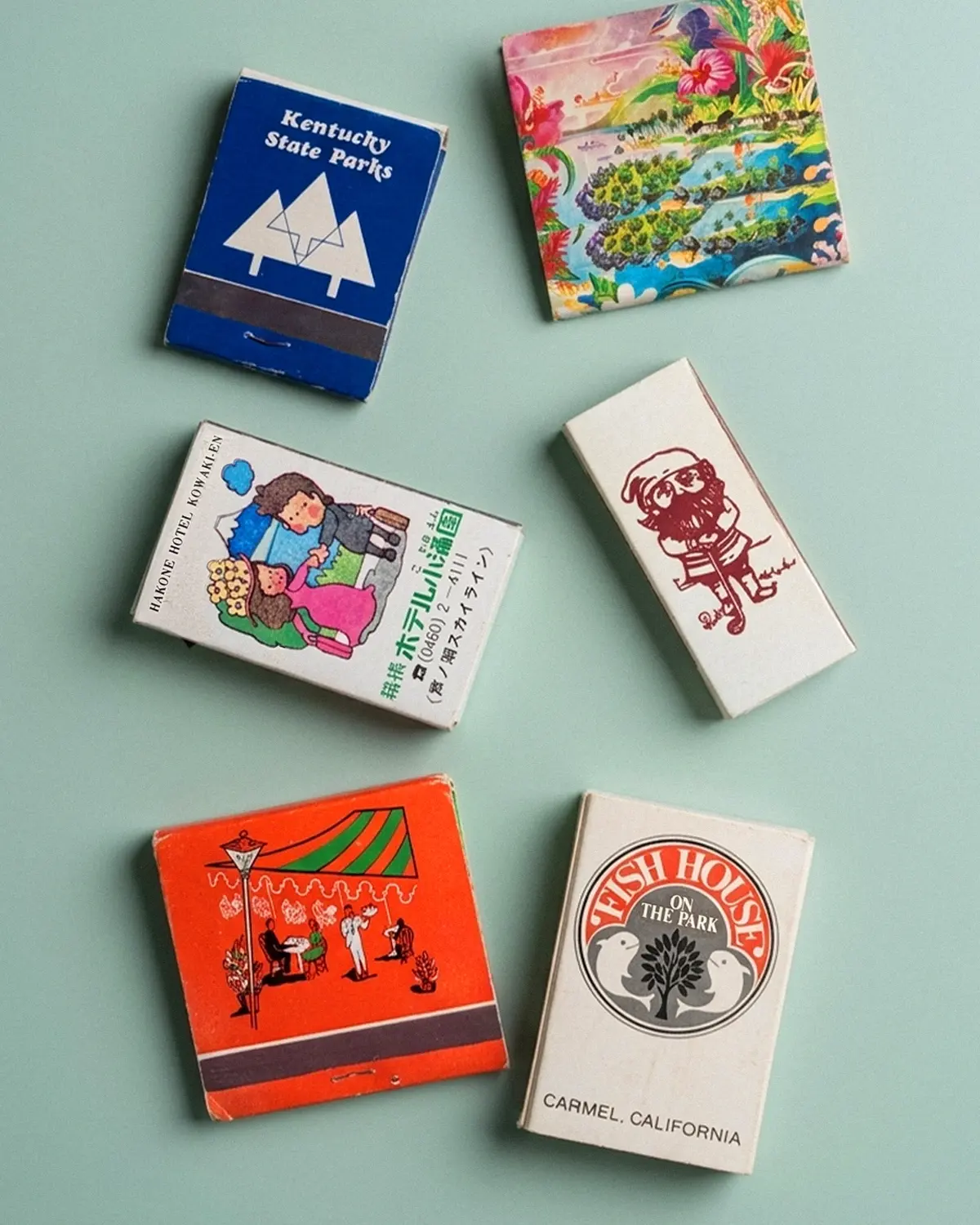
1930s Armstrong Tools catalog you found at a flea market or have the same exact matchbook collection you inherited from your chain-smoking grandmother (yes, a prized possession of mine). That's what can give you the edge as a creative; you just have to remember to do it and not take the easy route (again speaking to myself here). It will give your work more justification, more direction, and ultimately more heart.
So notice what stops you, wherever it happens to stop you. Then ask why it stopped you. Then go find out what stopped them. But don’t stop there; ask yourself…
What inspired my inspiration?
%20(2).png)